
Article: DIY Projects Using Recycled Ballast and Crushed Concrete

DIY Projects Using Recycled Ballast and Crushed Concrete
February and March are when the phones start ringing again with people saying, “We want to get going before the rush.” And honestly, that’s the right instinct.
The ground is still damp, plants aren’t growing madly yet, and it’s a great time to tackle the messy jobs without worrying about damaging a finished garden. This is when the hidden parts of a project really matter, the base layers, levelling, and preparation. The bits no one sees, but everything relies on.
At Hampshire Garden Supplies, we see lots of customers getting their subbase and groundwork sorted now so they’re ready to move straight into visible landscaping when spring arrives.
What Are We Talking About?
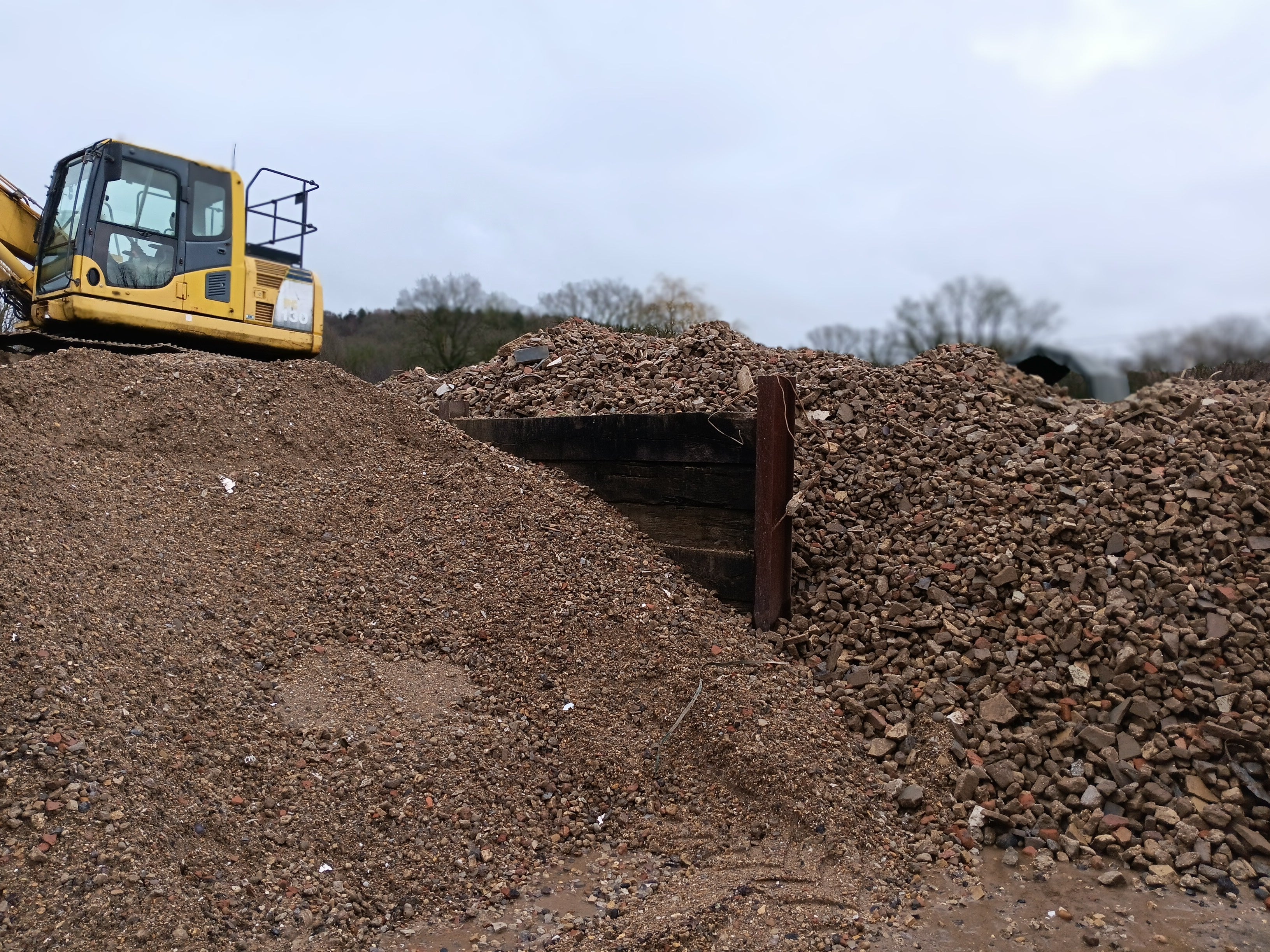
Recycled aggregates are produced from reclaimed landscaping and construction materials that have been processed and screened for reuse. This isn’t just tipped-out rubble; properly graded material compacts well and performs exactly as needed for early-stage groundwork.
Two products that are popular this time of year for preparing patios, shed bases, driveways or levelling are recycled ballast and recycled crushed concrete.
What’s the Difference Between Recycled Ballast and Crushed Concrete?
They’re closely related but used slightly differently depending on the job.
Recycled Ballast – screened to 20mm, is ideal for strong concrete mixes. Its blend of particle sizes binds together well and works perfectly where you need a reliable mix or a compactable layer beneath concrete.
Approximate weight: Bulk bag 800kg
View recycled ballast
Recycled Crushed Concrete – is screened to 80mm, making it bulkier. Great for infill, building up levels, or creating a solid sub-base before adding further layers.
Approximate weight: Bulk bag 800kg
View recycled crushed concrete
In simple terms, crushed concrete builds mass and structure, while recycled ballast is best for finer, well-compacting layers or concrete mixes.
Why Use Recycled Materials?
For many groundwork jobs, there’s no need to use brand-new quarried stone under areas that will never be seen. Recycled materials are:
- Cost-effective, especially over large areas - half the price of new.
- Environmentally responsible, making practical use of existing material
- Readily available for bulk projects
- Strong and reliable when installed correctly
Once compacted, they form a firm, stable base that performs exactly as expected.
Common Uses in Late Winter and Early Spring
Late winter and early spring are ideal for groundwork because you aren’t working around active planting or trying to keep lawns perfect. We regularly see recycled crushed concrete sub-base and recycled ballast used for:
- Sub-bases for patios and paving
- Levelling uneven areas before landscaping
- Filling voids such as old ponds or swimming pools
- Foundations for sheds, outbuildings, or greenhouses
- General bulk fill where depth is required
One recent customer used around 30 tonnes of crushed concrete to fill an old swimming pool before compacting it, creating the perfect base for its next phase. That’s exactly where the larger grade material comes into its own.
Why Do This Work Now?
Getting groundwork done in February or March means:
- You’re not disturbing planting later
- Ground conditions are easier to manage before everything dries out
- You’re ready to move straight onto visible landscaping when the weather improves
- Materials are easier to source before the seasonal rush
- The workload is spread, avoiding a mad rush in April
Can It Be Used Instead of MOT Type 1?
For many landscaping projects, recycled crushed concrete works as a practical alternative to MOT Type 1. Its range of particle sizes compacts into a stable, load-bearing layer, making it perfect for patios, hard standings, shed bases, and general sub-base work.
Recycled ballast is usually not a direct substitute, it’s finer and better suited to concrete mixes or lighter levelling layers. As with any sub-base, proper spreading and compaction are what give it long-term performance.

Handling and Planning Quantities
Bulk materials can be tricky to judge by eye. A shallow dip may only need a few tonnes, but deeper fills quickly add up.
- Small levelling jobs may only need a few bulk bags
- Sub-bases for slabs or structures need more depth
- Large infill areas can require significant tonnage
If you’re unsure, check quantities before ordering, it saves time and avoids having to top up midway through a job.
The Part of the Job That Really Matters
People naturally focus on the finished surface, the paving, the planting, the design. However, any landscaper will tell you, the success of a project depends on what sits underneath.
If the base is right, everything above it lasts longer and stays level. If it’s rushed, problems show up quickly. Using a well-graded recycled aggregate is one of the simplest ways to get the foundation right without overspending.
Ready When You Are
Both recycled ballast and crushed concrete sub-base are available for collection, at the Yard in Curdridge, or local delivery across Southampton, Winchester, and Portsmouth, typically within a 30-mile radius.
At just £24.99 per bulk bag, our recycled ballast and crushed concrete are roughly half the price of standard new materials, making them a highly cost-effective choice for early-season groundwork. Perfect for digging out, levelling, or building up ground, these materials may not be glamorous, but they provide a strong, reliable foundation that makes everything above it last longer - all while keeping your project budget-friendly and eco-conscious. What's not to love.
Read more
How Frost Affects Different Types of Stone
Learn how frost affects different types of stone, including sandstone, limestone, porcelain paving and aggregates. A winter guide from Hampshire Garden Supplies.
Read more